Is Your Suitcase Smarter Than Security? The Smart Luggage Question Every UK Flyer Needs Answered
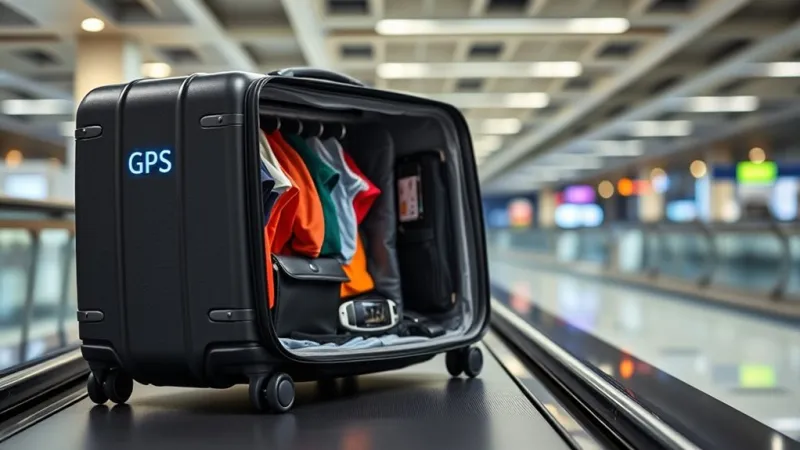
Photo: modern smart suitcase with GPS tracker and app airport terminal, via strongmocha.com
Walk through any UK airport departure lounge and you'll spot them: suitcases with built-in scales, USB ports glinting on the side, app-connected locks and GPS trackers pinging their location to nervous owners in the queue for Pret. Smart luggage has gone from gimmick to mainstream in about five years.
But there's a wrinkle. The very thing that makes these bags smart — a lithium battery — is the same thing that makes airlines twitchy. And the rules, frankly, are a mess.
Why Airlines Are Nervous
Lithium-ion batteries can, in rare cases, go into thermal runaway — a fire that's hard to extinguish and terrifying in an aircraft hold at 35,000 feet. That's why spare lithium batteries have to fly in the cabin, never in the hold, where a fire could spread undetected.
Smart luggage complicated this picture. Early designs had batteries buried in the frame, impossible to remove if a bag got checked in. Regulators and airlines responded, and the industry standard that emerged is simple in principle:
- If the battery can't be removed, the bag can't be checked in.
- If the battery can be removed, you can check the bag — provided you take the battery out and carry it in the cabin (or the bag's battery is switched off/disabled, depending on the carrier).
Simple in principle. In practice? It depends who you're flying with.
The Airline Patchwork
Here's where it gets murky. There's no single global rulebook that's applied consistently, and enforcement varies wildly:
- British Airways generally follows the removable-battery standard: smart bags are accepted in the hold if the battery is removed and carried onboard, or otherwise disabled per IATA guidance.
- easyJet and Ryanair take a stricter line on lithium batteries generally, and their low-frills model means less leniency at the gate. If your smart bag's battery isn't demonstrably removable, assume it's staying home or flying as your cabin bag with the battery out.
- Virgin Atlantic accepts smart luggage in the hold with removable batteries taken out, consistent with IATA recommendations.
The honest advice: check your specific bag's policy against your specific airline before you fly, and print or screenshot it. Gate staff have wide discretion, and "the website said it was fine" has never once worked as a defence.
What Frequent Flyers Actually Think
We spoke to a few regulars to take the temperature. Sarah, a management consultant who flies out of Birmingham weekly, is a convert: "The built-in scale saved me from a £55 excess fee at Gatwick. One bad experience paid for the bag."
Others are less convinced. James, who flies long-haul from Manchester monthly, ditched his smart case: "The GPS tracking was brilliant until the battery died mid-trip. Now I just bung a £25 AirTag-style tracker in an old case and get 90% of the benefit with none of the hassle."
That last point is worth sitting with. A small Bluetooth tracker in any ordinary suitcase replicates the single most-loved smart feature — location tracking — without the battery compliance headache, because coin-cell trackers are permitted in the cabin and the hold under most policies.
Which Features Are Worth It (and Which Are Noise)
Not all smart features are created equal:
- GPS/Bluetooth tracking — genuinely useful after the 2022 summer of lost luggage chaos. Worth it, whether built in or via a tracker.
- Built-in weighing — handy for chronic over-packers, though a £10 luggage scale does the same job.
- USB charging ports — nice on a long delay, but remember the battery may need removing if you check the bag.
- Remote digital locks — clever, but if your phone dies at security, you've built yourself a lovely problem.
- Motorised self-riding — fun at the demo, ridiculous in a queue at Stansted at 6am.
The BaggageHub Verdict
We're split, honestly. If you check bags regularly and you're anxious about them going astray, a smart case with a removable battery from a reputable brand is a justifiable purchase — just verify the airline rules each time, because they shift. If you're a cabin-bag-only traveller, save your money: a good lightweight case and a £25 tracker deliver everything you actually need.
The smarter bet, for now, might be a dumb suitcase with one small smart accessory inside it. The tech is moving faster than the regulations, and until the airlines agree a unified rulebook, the less battery you're carrying through security, the fewer arguments you'll have.
Smart luggage isn't being grounded — but it is being policed, inconsistently, by people with the power to make you unpack at the gate. Fly informed.