Night Shift in the Baggage Hall: Where Your Case Really Goes After Check-In
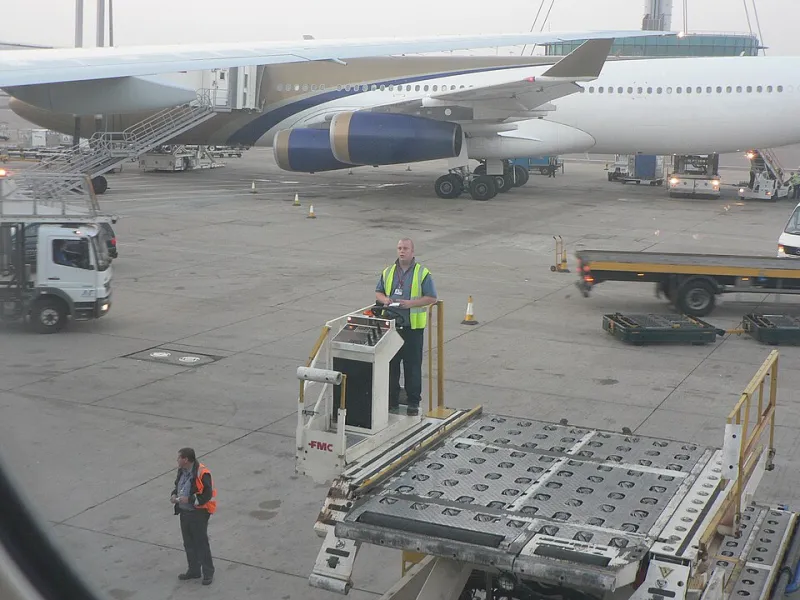
Photo: Can Pac Swire, CC BY-SA 2.0, via Wikimedia Commons
There's a moment at every UK airport, usually around 4:40am before the first Gatwick departure to Malaga, when a suitcase disappears down a rubber curtain and its owner stops thinking about it entirely. They head for security, then Wetherspoons, then seat 14C. The case, meanwhile, has just clocked on for the night shift.
We spent time talking to ground handling staff at three UK airports — the people who move your bags from kerb to hold and back again — and what they described is a hidden world of scanners, tractors and unspoken rules. It's also a world where the smallest thing about your bag can change how it's treated.
The First Handshake: Check-In and the Tag
Everything starts with the tag. That sticky strip with the barcode isn't a receipt — it's the bag's boarding pass, its passport and its diary all in one. Every scan it passes through logs where it is, and handlers say the single most common cause of delayed luggage isn't lost bags at all. It's unreadable tags.
"People fold the tag into the handle, or it's torn halfway off from last summer," one Manchester-based handler told us. "If the scanner can't read it, the system guesses. Guessing takes time."
The advice from staff is boringly consistent: one solid tag on the handle, one inside the bag, and peel off the old ones. A case wearing four destinations' worth of barcodes is a puzzle nobody at 5am wants to solve.
Down the Rabbit Hole
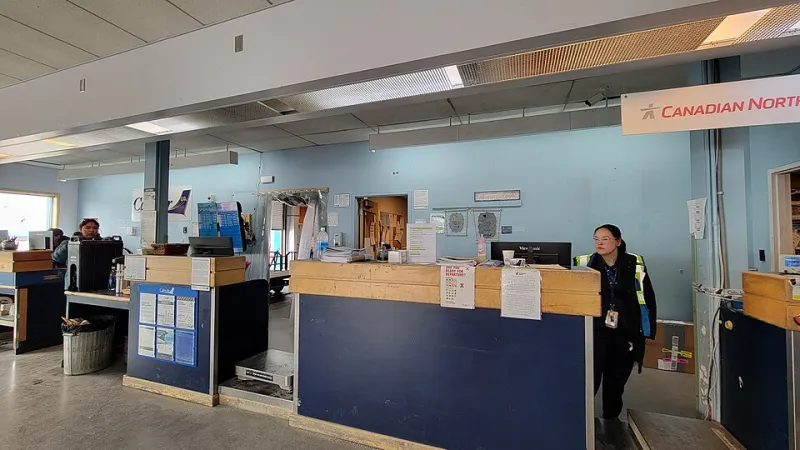
Once scanned, your bag rides a belt into the bowels of the terminal — a place most passengers never see. Picture an underground road network, except the traffic is suitcases and the junctions are high-speed scanners that photograph every case from six angles in a fraction of a second.
If anything looks unclear on the X-ray — a power bank, a dense knot of cables, a suspiciously solid block of something — the bag is pulled aside and a human opens it. Staff say the biggest self-inflicted problem is still lithium batteries packed into hold luggage, which is why your smart luggage keeps getting refused. The second biggest, apparently, is cheese.
"You'd be amazed how much cheddar gets flagged," one handler laughed. "Dense block, odd shape on the scan. Somebody always has to open the case and confirm it's a truckle."
The Human Half of the Journey
After screening, a person puts your bag onto a cart. Then another person loads that cart into a container, and a third drives the container to the aircraft. At every step, your case is handled — not thrown, most insist, but handled, quickly, often in the rain, often at speed.
This is where bag design matters more than any marketing video. Handlers describe a hierarchy:
- Two wheels and a rigid frame — easy to slide, easy to stack.
- Four spinner wheels — convenient for you, slightly less stable in a moving cart.
- Duffels and soft bags — fine, but they shift and slump.
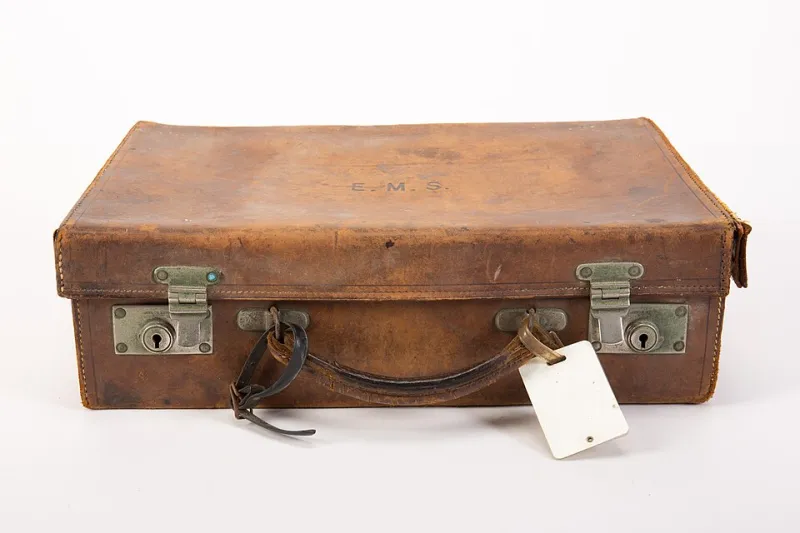
- Broken handles, dangling straps, loose buckles — the enemy. A strap catches on a belt and the whole line stops. A snapped handle means someone has to lift your 23kg case with one hand and a prayer.
"A bag with a dodgy zip or no working handle gets treated differently," one told us, without apology. "Not badly. But nobody's being gentle with a bag that fights back."
The Quiet Rules of the Hall
There are rules in the baggage hall that never make it onto airline websites. Heavy items go low. Fragile stickers mean almost nothing — "they fall off," one handler shrugged — but a hard-shell case genuinely does protect what's inside, mostly from other bags rather than from being dropped.
Last-minute packing matters too. A case that's overfilled to the point of bulging is far more likely to burst on a belt or in a container, and a burst case in the hold means everything stops while it's cleared up. Staff say the sweet spot is a bag packed so it closes comfortably, weighed at home, with nothing loose rattling against the zip.
And the hours matter more than you'd think. Late-night flights run with skeleton crews. If your bag's connection is tight — 45 minutes at Heathrow, say — the difference between it making the transfer and not is often just how busy the hall is that night. It's not personal. It's logistics.
The Reunion
By the time you're shuffling onto the carousel, your bag may have been scanned eight or more times, driven half a mile underground and stacked in the dark by someone you'll never meet. When it appears, intact and on time, that's not luck — it's a chain of people who mostly get it right.
But staff say travellers can stack the odds. Sturdy handles. Tags that are legible. Nothing dangling. Batteries in your cabin bag. Weigh it before you leave the house, not at the desk.
Your suitcase spends the night in some pretty capable hands. Give it half a chance, and it'll come back to you in the morning — cheese, truckle and all.