The Bag Didn't Land: Your Hour-by-Hour Plan for Missing Luggage in the UK

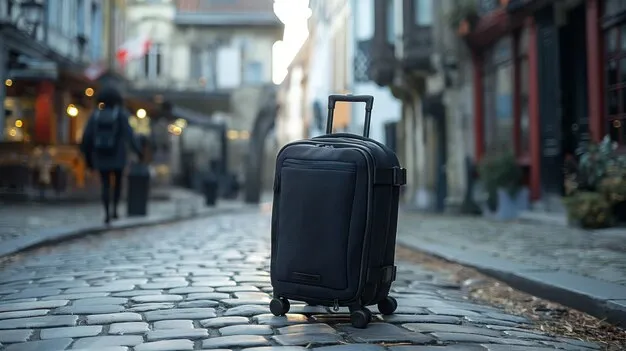
Photo: Timothytyy, CC BY-SA 4.0, via Wikimedia Commons
There's a particular kind of silence that falls when the carousel stops turning and your suitcase hasn't appeared. Around you, everyone is hauling their bags off the belt, and you're the one still staring at the rubber flaps, doing the maths. Deep breath — bags go missing far more often than they stay missing, and the process for getting yours back (or compensated) is more straightforward than it feels at that moment.
Here's your plan, in order.
Step One: Don't Leave the Hall Without a PIR
Before you do anything else — before the taxi queue, before ringing your partner in a panic — find the airline's baggage desk and file a Property Irregularity Report, or PIR. This is the document that starts everything.
You'll need:
- Your boarding pass and baggage tag stubs (the printed sticker on your boarding pass, not just the tag on the bag — though if the bag made it onto the plane, that tag matters)
- A description of the case: colour, size, brand, and any distinguishing features like a battered sticker from Lisbon
- A contact address in the UK, ideally your home rather than a hotel
Get the reference number and photograph the report. Some airlines now let you file this digitally, but an in-person report at the airport is still the gold standard, especially if you might claim later.
Step Two: Know Your Rights (They're Better Than You Think)
Most flights in and out of the UK fall under the Montreal Convention, which treats lost, delayed and damaged luggage as the airline's problem — up to around £1,300 (roughly 1,288 SDRs, for the pedants). That covers not just the bag itself but reasonable essentials you had to buy while it was AWOL.
The key word is reasonable. A toothbrush, a change of clothes and a phone charger? Yes. A designer shopping spree? No.
If your bag is merely delayed, airlines typically cover essential purchases for the first few days. If it's declared officially lost — usually after 21 days, though some airlines are quicker — you can claim the full value.
Step Three: The Timeline, Honestly
- Hours 0–24: Most bags turn up. Airlines' worldwide tracing systems (WorldTracer, in most cases) usually locate them within a day, often on a connecting flight that never made it.
- Days 2–5: Keep receipts for everything you buy. Chase the airline daily using your PIR reference. Politely, but daily.
- Days 6–21: Submit a written claim for your expenses. Many airlines require this within 21 days of the bag's return — check your PIR paperwork.
- Day 21+: The bag is presumed lost. Time for the full compensation claim.
Step Four: Write the Letter (Template Below)
When you claim, do it in writing, by email, and keep copies. Something like this works:
Dear [Airline] Baggage Claims Team, Re: PIR reference [number], flight [number] on [date] from [origin] to [airport]. My checked baggage has not been returned to me since [date]. I have contacted your tracing team [number] times. I now believe the bag to be lost and am claiming under the Montreal Convention 1999 for the value of the bag and contents, totalling £[amount]. Receipts and a full itemised list are attached. Please confirm receipt and respond within 14 days.
Itemise everything. Airlines are far more likely to settle a tidy, evidenced claim quickly than a vague one.
Step Five: The Insurance Question
If you have annual travel insurance or even a decent credit card with travel cover, check it before accepting the airline's first offer. Insurers often cover the full contents value, whereas airlines may apply depreciation. Don't double-claim for the same items, though — pick the better route for each.
The Real Fix: Pack Like You Expect to Lose It
Here at BaggageHub we've heard enough stories to know the difference between a lost bag being an inconvenience and a disaster is usually about four items. Before any flight, your hand luggage should contain:
- 24 hours of medication (more for long-haul)
- One full change of clothes, including underwear
- Chargers and any work essentials
- Valuables — jewellery, electronics, documents
- Toiletries to get you through a night
Think of it as a miniature version of your trip, zipped into your cabin case. If the worst happens, you'll stroll out of the airport, file your report, and know you can survive comfortably until the airline does its job.
Lost luggage is a headache. With a PIR in hand, receipts in a folder and a well-packed cabin bag, it's a headache with a clear cure — and usually, your bag will be back on your doorstep before you've finished writing the complaint.